


Key Takeaways
- SpaceX named F2Pool co-founder Chun Wang Mission Commander for its first crewed interplanetary Starship flight in 2026.
- F2Pool controls 11.32% of Bitcoin’s global hashrate at 110.86 EH/s, producing 114 blocks over the past week, according mempool.space stats.
- Wang takes a two-year leave from F2Pool, previously commanding the Fram2 polar orbit mission aboard Crew Dragon in 2025.
SpaceX Taps F2Pool’s Chun Wang to Lead First Commercial Interplanetary Crew Mission
SpaceX confirmed Wang’s appointment on May 22, 2026. The mission will carry a crew beyond the Earth-Moon system for the first time in commercial spaceflight history. No Mars landing is planned. The objective is to test long-duration life support, radiation shielding, propulsion, and human endurance across deep space before future crewed cargo missions can follow.
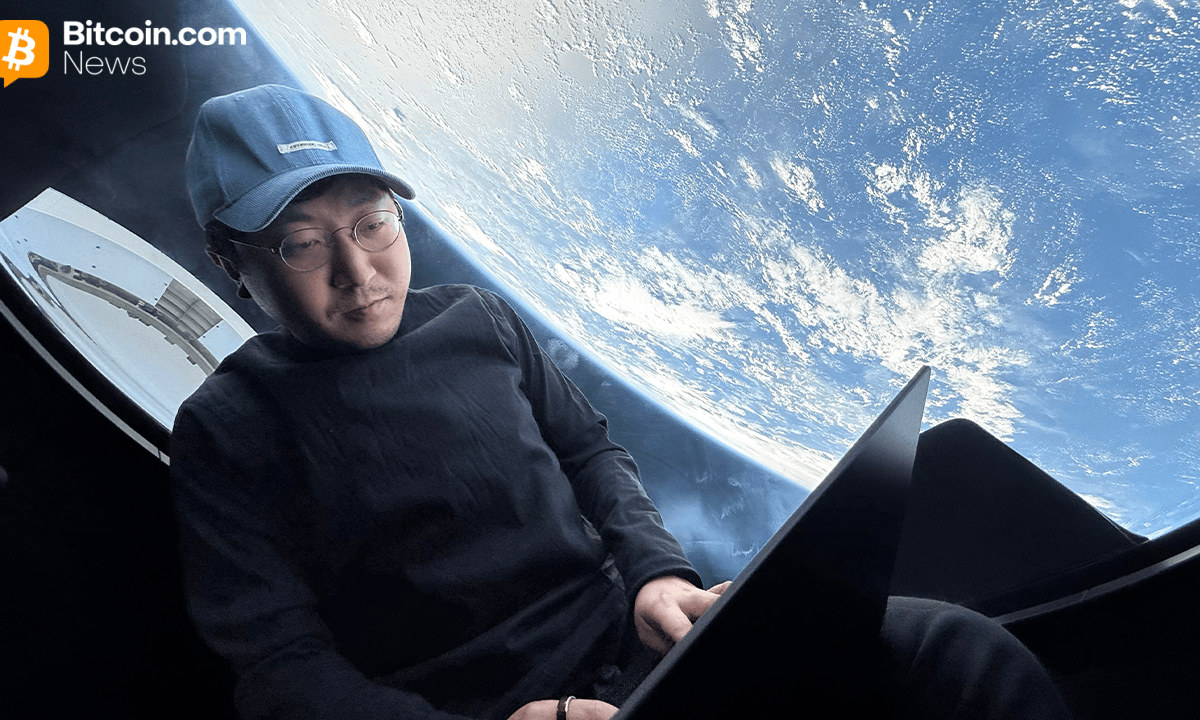
Wang is no stranger to private spaceflight. In 2025, he commanded the Fram2 mission aboard a SpaceX Crew Dragon, completing the first human flight over Earth’s poles. That mission lasted approximately 3.5 days and carried 22 onboard experiments, including the first X-ray conducted in space. Wang became the first Maltese citizen in orbit. Before the Mars mission launches, he is also set to join a circumlunar Starship flight alongside Dennis and Akiko Tito.
The upcoming interplanetary flight will use Starship’s V3 architecture, built for high payload capacity, reusability, and in-space refueling. Those capabilities are central to Elon Musk’s stated goal of placing approximately one million people on Mars over the coming decades. Wang’s mission will generate data that informs those later, more ambitious flights.
Born in Tianjin, China, around 1982, Wang started mining bitcoin in 2011. Two years later, he co-founded F2Pool, one of the first major bitcoin mining pools to operate out of China. He founded the staking platform Stakefish in 2018. Wang holds citizenship in Saint Kitts and Nevis and Malta, and his personal bitcoin holdings are estimated at over $300 million.
F2Pool currently controls 11.32% of Bitcoin’s global hashrate, operating at 110.86 exahashes per second, mempool.space stats show. Over the past week, the pool produced 114 blocks across a network tracking 1,007 total blocks from 21 active pools. That share places F2Pool consistently among the top two or three mining pools in the world by hashrate, giving it measurable influence over Bitcoin network security.
Wang is taking a two-year leave from his roles at F2Pool and Stakefish to serve as Mission Commander. The leave marks a concrete operational handoff for a pool that processes a significant portion of all newly mined bitcoin.
The Mars flyby mission carries real risks. Crew members will face extended microgravity exposure, elevated radiation levels, psychological stress from isolation, cryogenic fuel management challenges, and the need for hardware reliability over a multi-year flight. The mission is designed to surface those variables and address them before any landing attempt is made.
Wang’s profile aligns with a broader pattern of high-net-worth individuals funding and participating in private space missions. His move from crypto infrastructure to deep-space command reflects how capital generated in bitcoin’s early years is now funding operations well beyond Earth’s orbit.
SpaceX’s Starship program continues flight testing and V3 upgrades in parallel with mission planning. Wang’s appointment confirms that the company is moving forward with crewed interplanetary timelines on the commercial side, separate from any government contract.
For F2Pool miners, the operational implications of a two-year leadership absence remain to be seen. The pool’s hashrate share and block production have held steady, and management continuity will be a question the community tracks through Wang’s departure.
What Wang does in deep space over the next two years will be watched by two very different audiences: space agencies tracking private interplanetary capability, and a bitcoin mining industry that built one of its largest pools around a man now headed past the Moon.